Continuing my writing exercises, this one goes to the other main character in my sci-fi WIP.
This exercise comes from Fiction Writer’s Workshop (ISBN 1884910394) by Josip Novakovich. Chapter 2: Setting. #12: One page. Make a character visible through her surroundings. (he lists some examples of how) Objective: to learn the power of setting as a means for character portraits. Bits of environment are your tubes of paint.
Lena dropped into her VR recliner with a sigh. A few crumbs from the morning’s coffee cake lingered on the arm. She flicked them off one by one. Then she picked up her jack and plugged it into the socket under her left ear. Virtual reality slid down over what her meat eyes saw.
Green and amber status lights on her rig winked. Custom-built, of course. A steel rack of quantum processors, another of wireless hubs for various frequencies, the third rack for her secret-ingredient hardware, and a private bubble fusion plant so the draw on the station’s power grid wouldn’t give her away. Everything was cabled to reduce snooping and the extra wire color-tagged, neatly looped, and zip-tied.
The rest of her apartment’s front room was a tangle of dirty laundry waiting for the multi-washer and boxes from the grocery delivery service that she hadn’t broken down for the recycling chute yet. She had two tall stools that stood before the kitchenette counter — or at least two mountain peaks in the field of clutter.
Front door had a clear swath in front of it, though, and a second, vertical deadbolt that Lena had added well above the standard one. Wouldn’t stop anyone determined to get in, but it’d give her time to get out the fire door.
Showing posts with label scifi. Show all posts
Showing posts with label scifi. Show all posts
Tuesday, November 26, 2013
Tuesday, November 19, 2013
Writing exercise #1: inner peace
I've been writing this blog for over two years now and I find myself short on things to say... partly because I hate repeating myself and I've never liked short blog posts that don't say anything meaningful. So let's try something different this week.
The internet's full of writing prompts and exercises, and I've never used them. It hasn't been how I write: for me, it's a very deliberate process where the spontaneity is limited to the moments that I'm standing beside my characters writing down what they do. I thought I'd try a few in the context of my current (hard sci fi) WIP, which has been giving me some trouble.
This writing prompt comes to us from Poets & Writers: Fiction writers know that conflict drives plot. Tension and drama imbue life into our characters and propel their stories forward. Human nature, however, craves tranquility and clarity. Write five hundred words describing your protagonist at peace—truly one with the universe, even if only for several seconds. Perhaps your character is sitting on a park bench and staring at a bruised cloud, or on a crowded subway car listening to the rails below, or walking out of a cemetery with a beer in hand. Peace is unique to everyone.
“Hang me, this time,” Shen said as he dropped to his knees. “Like you hang Radovan.”
Jezebel tossed down two of the skeins of rope and unwound the third slowly. She measured out several long loops before answering. “Are you ready for that? I’d have to bind your wrists.”
His nerves skittered under his skin. The snug embrace of rope, though, and the freedom of the air… it had been too long since he’d been in null gravity and felt that. “It’s the closest to zero gee I can get.”
The rope softly hissed, sliding through Jez’s dark hands. She nodded. “We’ll try it, then.”
Shen spread his arms and closed his eyes. The first loop of rope settling across the back of his neck released a sigh from him. First time Jez had bound him, she’d put a loop around one wrist and fear had lashed up out of him. Animal fear. Primal need to escape. He’d suffered too much while zip-tied by his wrists.
But the familiar progress of snug coils of rope looping around his chest and knots drawing them snug eased Shen’s mind. The gentle pressure evened out his breath and dropped his heart rate. His skittering nerves, still antsy at the thought of binding his wrists, slowed.
He could trust Jez. She only tied him as he asked. Checked on him to be sure he was comfortable. Freed him before there was any risk of limited circulation. It would be the same with his wrists. He was strong enough to let his hands be tied. Didn’t fear his own helplessness anymore.
Jez had never beaten him, even when she first bought his indenture and he was just “a pile of broken glass and frayed wire,” as Radovan had said. Shen trusted her.
When she reached Shen’s waist, Jez dropped the remaining rope and fetched a set of D-rings. Those had to be worked into the harness, one at the small of his back and one between his shoulder blades. Jez ran the ropes under the crotch of Shen’s shorts and up his back, lacing them into the coils there and anchoring the second ring.
“Let’s try a dragonfly sleeve, rather than Radovan’s arrangement,” Jez murmured. “Arms before you.”
Shen held out his long arms, fists touching. Jezebel began with loops over his shoulders and worked slowly. Fat knots anchored pairs of loops at precise intervals. The loops bound his upper arms together. Then his elbows.
He closed his eyes when a broken-glass blade of fear slid past him. Felt Jezebel hesitate. He held steady, safe in his snug harness, and she continued. Two more knots and loops, one for his forearms and one for his wrists.
Jagged bits of memories rumbled inside him. Pain from kickings, from tasers. The grind of hunger and fear. The rope stifled those bits. Dulled their edges.
Distantly, Shen felt the carabiners click into the two D-rings on his harness. A motor purred and lifted him off his knees. He rocked to horizontal, facing the floor, and swung gently with his bound arms hanging downward.
Zero gee, or close enough. Close enough to free.
The internet's full of writing prompts and exercises, and I've never used them. It hasn't been how I write: for me, it's a very deliberate process where the spontaneity is limited to the moments that I'm standing beside my characters writing down what they do. I thought I'd try a few in the context of my current (hard sci fi) WIP, which has been giving me some trouble.
This writing prompt comes to us from Poets & Writers: Fiction writers know that conflict drives plot. Tension and drama imbue life into our characters and propel their stories forward. Human nature, however, craves tranquility and clarity. Write five hundred words describing your protagonist at peace—truly one with the universe, even if only for several seconds. Perhaps your character is sitting on a park bench and staring at a bruised cloud, or on a crowded subway car listening to the rails below, or walking out of a cemetery with a beer in hand. Peace is unique to everyone.
“Hang me, this time,” Shen said as he dropped to his knees. “Like you hang Radovan.”
Jezebel tossed down two of the skeins of rope and unwound the third slowly. She measured out several long loops before answering. “Are you ready for that? I’d have to bind your wrists.”
His nerves skittered under his skin. The snug embrace of rope, though, and the freedom of the air… it had been too long since he’d been in null gravity and felt that. “It’s the closest to zero gee I can get.”
The rope softly hissed, sliding through Jez’s dark hands. She nodded. “We’ll try it, then.”
Shen spread his arms and closed his eyes. The first loop of rope settling across the back of his neck released a sigh from him. First time Jez had bound him, she’d put a loop around one wrist and fear had lashed up out of him. Animal fear. Primal need to escape. He’d suffered too much while zip-tied by his wrists.
But the familiar progress of snug coils of rope looping around his chest and knots drawing them snug eased Shen’s mind. The gentle pressure evened out his breath and dropped his heart rate. His skittering nerves, still antsy at the thought of binding his wrists, slowed.
He could trust Jez. She only tied him as he asked. Checked on him to be sure he was comfortable. Freed him before there was any risk of limited circulation. It would be the same with his wrists. He was strong enough to let his hands be tied. Didn’t fear his own helplessness anymore.
Jez had never beaten him, even when she first bought his indenture and he was just “a pile of broken glass and frayed wire,” as Radovan had said. Shen trusted her.
When she reached Shen’s waist, Jez dropped the remaining rope and fetched a set of D-rings. Those had to be worked into the harness, one at the small of his back and one between his shoulder blades. Jez ran the ropes under the crotch of Shen’s shorts and up his back, lacing them into the coils there and anchoring the second ring.
“Let’s try a dragonfly sleeve, rather than Radovan’s arrangement,” Jez murmured. “Arms before you.”
Shen held out his long arms, fists touching. Jezebel began with loops over his shoulders and worked slowly. Fat knots anchored pairs of loops at precise intervals. The loops bound his upper arms together. Then his elbows.
He closed his eyes when a broken-glass blade of fear slid past him. Felt Jezebel hesitate. He held steady, safe in his snug harness, and she continued. Two more knots and loops, one for his forearms and one for his wrists.
Jagged bits of memories rumbled inside him. Pain from kickings, from tasers. The grind of hunger and fear. The rope stifled those bits. Dulled their edges.
Distantly, Shen felt the carabiners click into the two D-rings on his harness. A motor purred and lifted him off his knees. He rocked to horizontal, facing the floor, and swung gently with his bound arms hanging downward.
Zero gee, or close enough. Close enough to free.
Tuesday, August 6, 2013
What's SF got that fantasy doesn't...?
Science fiction has a long history of offering critiques of contemporary society, and of deliberately wrapping social issues in fictional trappings to make it "easier" for the audience to think about the issue at hand. This is known widely enough, apparently, that I recently heard that from a friend who isn't even much of a genre fan. (His opinion being that you should face the real issues in all their painfully unjust glory. He has a point.)
Fantasy does not have this tradition. A handful of writers have a reputation for social commentary within fantasy novels -- such as Terry Pratchett -- but it's not common. Or, at least, it goes unnoticed and unremarked-upon.
I've heard it said that whereas science fiction looks "forward", fantasy looks "backward" and is a re-imagining of how things "used to be". Perhaps it's some essence of human nature that makes it easier for us to relate the future to the present. Maybe we're thinking of how to get there from here even if it's only in the most abstract way.
The past doesn't seem to provoke that sort of analysis of the present. If you present a minority population living in segregation and repression in a science fiction story (such as District 9), people notice and comment on it. If you do it in fantasy story... hmm, having trouble coming up with an example. Which is part of the problem, admittedly.
A lot of fantasy stories center on princes, nobles, the "gifted" who've risen above poverty -- whereas I've always been fascinated by the lives of ordinary people in fantasy worlds. Melusine has an MC who was still hacking out a living as a ghetto thief, there's an example. Personally, I want the stable-boy's perspective, I want to hear about why a woman has to take in laundry to pay her rent -- or the nail-biting dangers of putting herself on the street corner to do the same. What does a ghetto look like, in high fantasy? What stories happen, in there?
Why does fantasy always focus on the rich and powerful? Because everyone else is too busy keeping body and soul together to go on amazing quests and save the world? As if those are the only stories that matter...
I want to shout out to Chris Gerwel here, because of his recent blog post about realism and the quotidian fantastic. I'm thinking I'm going to be guilty of writing a fair amount of quotidian fantasy (lol, love the pretentious name) in my writing career. It's definitely an interest of mine, and in fantasy more than science fiction.
Disciple's main character is a peasant girl who has worked hard to become a healer. In Hawks & Rams, one MC is a shepherd boy and the other's a border patrol Ranger. Recently, some more thoughts have been bubbling up and I've codenamed them "Wharf Rats" -- you can guess why.
Those thoughts are coming in response to real-world stories I've been hearing of late (from that friend who doesn't believe in disguising issues). Which doesn't surprise me because I've found that the best genre ideas come from outside the genre. The further outside, the better.
Are there any fantasy stories you'd point to for their social commentary?
ps. Writing the tweet announcement for these posts often gooses me with things I didn't think of. Would social commentary in fantasy be too... boring?
Fantasy does not have this tradition. A handful of writers have a reputation for social commentary within fantasy novels -- such as Terry Pratchett -- but it's not common. Or, at least, it goes unnoticed and unremarked-upon.
I've heard it said that whereas science fiction looks "forward", fantasy looks "backward" and is a re-imagining of how things "used to be". Perhaps it's some essence of human nature that makes it easier for us to relate the future to the present. Maybe we're thinking of how to get there from here even if it's only in the most abstract way.
The past doesn't seem to provoke that sort of analysis of the present. If you present a minority population living in segregation and repression in a science fiction story (such as District 9), people notice and comment on it. If you do it in fantasy story... hmm, having trouble coming up with an example. Which is part of the problem, admittedly.
A lot of fantasy stories center on princes, nobles, the "gifted" who've risen above poverty -- whereas I've always been fascinated by the lives of ordinary people in fantasy worlds. Melusine has an MC who was still hacking out a living as a ghetto thief, there's an example. Personally, I want the stable-boy's perspective, I want to hear about why a woman has to take in laundry to pay her rent -- or the nail-biting dangers of putting herself on the street corner to do the same. What does a ghetto look like, in high fantasy? What stories happen, in there?
Why does fantasy always focus on the rich and powerful? Because everyone else is too busy keeping body and soul together to go on amazing quests and save the world? As if those are the only stories that matter...
I want to shout out to Chris Gerwel here, because of his recent blog post about realism and the quotidian fantastic. I'm thinking I'm going to be guilty of writing a fair amount of quotidian fantasy (lol, love the pretentious name) in my writing career. It's definitely an interest of mine, and in fantasy more than science fiction.
Disciple's main character is a peasant girl who has worked hard to become a healer. In Hawks & Rams, one MC is a shepherd boy and the other's a border patrol Ranger. Recently, some more thoughts have been bubbling up and I've codenamed them "Wharf Rats" -- you can guess why.
Those thoughts are coming in response to real-world stories I've been hearing of late (from that friend who doesn't believe in disguising issues). Which doesn't surprise me because I've found that the best genre ideas come from outside the genre. The further outside, the better.
Are there any fantasy stories you'd point to for their social commentary?
ps. Writing the tweet announcement for these posts often gooses me with things I didn't think of. Would social commentary in fantasy be too... boring?
Friday, April 27, 2012
X: Signature for the illiterate
Legally, a simple X can still be the signature of a person that cannot write their name. It needs to be witnessed, since such a thing is so easy to forge, but it's still legit. Some places substitute an inked fingerprint, which is quite reasonable too.
Illiteracy is the default state in my fantasy story -- not surprising, I'm sure. Peasants have more important and time-consuming survival skills to teach their children than reading and writing. Most of them would sign with an X if they needed to sign something.
Unexpectedly, this also came up in my science fiction when a truce needed to be signed. The universe I built -- the Jovian Frontier -- is so hooked up, wireless and otherwise computer-driven that I suddenly realized that it had been 150,000 words and nobody had even typed anything, never mind held a pen and written something on a piece of paper.
 (a piece of what? the stuff you blow your nose on?)
So I was wrapping up the end of the second book and suddenly I looked over at Maggie and asked, Can you sign your name?
She said she'd practice for it, since this treaty was important. But it made me think about hand-writing and how it's slowly but steadily fading from the world. Would it ever become so unusual that one would need to practice one's signature for a special event?
What would that special event be?
If computers become good enough to take dictation and read text to us, will reading fall by the wayside too?
Perish the thought...
Illiteracy is the default state in my fantasy story -- not surprising, I'm sure. Peasants have more important and time-consuming survival skills to teach their children than reading and writing. Most of them would sign with an X if they needed to sign something.
Unexpectedly, this also came up in my science fiction when a truce needed to be signed. The universe I built -- the Jovian Frontier -- is so hooked up, wireless and otherwise computer-driven that I suddenly realized that it had been 150,000 words and nobody had even typed anything, never mind held a pen and written something on a piece of paper.
So I was wrapping up the end of the second book and suddenly I looked over at Maggie and asked, Can you sign your name?
She said she'd practice for it, since this treaty was important. But it made me think about hand-writing and how it's slowly but steadily fading from the world. Would it ever become so unusual that one would need to practice one's signature for a special event?
What would that special event be?
If computers become good enough to take dictation and read text to us, will reading fall by the wayside too?
Perish the thought...
Wednesday, April 25, 2012
V: Voice
I recently finished Part III of my fantasy monstrosity, Disciple, which included a full revision of Part II... all of which comes to about 100k words over a few months so I was well steeped in my fantasy-writing voice.
Then I tried to write a character interview with Neal, one of my science fiction characters. The change in voice was kinda like downshifting too far and I felt that whump the engine does, then heard it rev painfully high... well, if you drive a stick shift you know what I'm talking about.
Voice is difficult to pin down. You know it when you see it (like porn.) In thinking about it, I remembered that I have two scenes of somebody watching somebody seducing somebody else. So I thought I'd compare voices.
No context, yeah, but what's going on doesn't matter right now. I'm looking at word choices and sentence structures.
Fantasy:
I was given the smallest of the guest rooms as my own and the men shared the others. My boots had hardly been off in two days, and when I sat on the mattress and unlaced them it took some two-handed wiggling to get them loose and then some peeling for the wool socks. The floor was chilly under bare feet, but no worse than my dormitory room at the Order. The baron's daughter had said she’d return with a hot water bladder for my bed.
My toes drying, I got up to shut my door. Glancing down the hall — I was at the end — I saw her, lamp in hand, leaning against the wall opposite Sir Anders. They spoke too quietly to hear, but she laughed at something he said and played at sassing back with one fist on her generous hip. That made him laugh in return.
Sir Anders shifted to put his hand to the wall beside her and lean on it. She turned her nose away, haughty, but spoiled the effect with a smile. He caught her chin with two fingers and turned her back for a kiss.
I felt a blush rise on my face. I pushed the door shut but couldn’t help lingering with one eye at the shrinking crack.
The baron's daughter stepped around him and he turned, leaned against the wall where she’d been. She took a few steps, looked back, and then kept walking. After a moment, Sir Anders followed.
I never did get that hot water bladder.
Science fiction:
Maggie, leaning past Neal to watch, saw Shen’s dark eyes sharpen on Glenna. His casual hug turned into a tighter grip. The corner of a grin slipped around her face as they hovered, noses almost touching, eyes locked. Maggie’s pulse shuddered in her chest, turning cold. Shen’s hand on Glenna’s back, long fingers splayed, caught on the edge of her corset as his grip tightened.
And Shen kissed her sister.
Glenna raked her fingers into [his] dark green hair and his hand was sliding down toward her butt. A bit of a twist and she was slithering onto his lap, wedged against the lip of the bar.
A squeeze bottle broke Maggie’s line of sight and she blinked. Neal flipped the nozzle open and hesitated, noticing her. He was blurring fast as her eyes filled up. And behind him, where the vague glimpses of green and…
“Psst!” Jezebel snapped and pointed toward the open door at the end of the bar. “Get a room!”
Maggie blinked and tears clung to her lashes. Got a glimpse of Glenna the moment Shen pinned her up against the door sill, her arms inside his unzipped jumpsuit. Maggie squeezed her eyes shut. Her sister’s giggles faded down the hallway past the door.
“Hey, hey.” Neal’s arm wrapped around her, put her face to his shoulder. “Don’t cry.”
Verbs
In the interests of keeping this short, just looking at the verbs illustrates pretty well how much softer and slower my fantasy voice is.
Fantasy:
was given shared had been sat unlaced took wiggling peeling was had said drying got glancing was saw leaning spoke laughed said played made felt rise pushed couldn't lingering shrinking stepped turned leaned 'd been took looked kept followed get
Science fiction:
leaning watch saw sharpen turned slipped hovered shuddered turning caught tightened kissed raked was sliding slithering broke blinked flipped hesitated blurring filled snapped pointed blinked clung got pinned squeezed faded wrapped put cry
Why wasn't kiss a verb in the fantasy seduction? was the first thing I saw when I made those lists. What do you see?
Want to read more? My writing samples: Fantasy, Science fiction.
Voice is difficult to pin down. You know it when you see it (like porn.) In thinking about it, I remembered that I have two scenes of somebody watching somebody seducing somebody else. So I thought I'd compare voices.
No context, yeah, but what's going on doesn't matter right now. I'm looking at word choices and sentence structures.
Fantasy:
I was given the smallest of the guest rooms as my own and the men shared the others. My boots had hardly been off in two days, and when I sat on the mattress and unlaced them it took some two-handed wiggling to get them loose and then some peeling for the wool socks. The floor was chilly under bare feet, but no worse than my dormitory room at the Order. The baron's daughter had said she’d return with a hot water bladder for my bed.
My toes drying, I got up to shut my door. Glancing down the hall — I was at the end — I saw her, lamp in hand, leaning against the wall opposite Sir Anders. They spoke too quietly to hear, but she laughed at something he said and played at sassing back with one fist on her generous hip. That made him laugh in return.
Sir Anders shifted to put his hand to the wall beside her and lean on it. She turned her nose away, haughty, but spoiled the effect with a smile. He caught her chin with two fingers and turned her back for a kiss.
I felt a blush rise on my face. I pushed the door shut but couldn’t help lingering with one eye at the shrinking crack.
The baron's daughter stepped around him and he turned, leaned against the wall where she’d been. She took a few steps, looked back, and then kept walking. After a moment, Sir Anders followed.
I never did get that hot water bladder.
Science fiction:
Maggie, leaning past Neal to watch, saw Shen’s dark eyes sharpen on Glenna. His casual hug turned into a tighter grip. The corner of a grin slipped around her face as they hovered, noses almost touching, eyes locked. Maggie’s pulse shuddered in her chest, turning cold. Shen’s hand on Glenna’s back, long fingers splayed, caught on the edge of her corset as his grip tightened.
And Shen kissed her sister.
Glenna raked her fingers into [his] dark green hair and his hand was sliding down toward her butt. A bit of a twist and she was slithering onto his lap, wedged against the lip of the bar.
A squeeze bottle broke Maggie’s line of sight and she blinked. Neal flipped the nozzle open and hesitated, noticing her. He was blurring fast as her eyes filled up. And behind him, where the vague glimpses of green and…
“Psst!” Jezebel snapped and pointed toward the open door at the end of the bar. “Get a room!”
Maggie blinked and tears clung to her lashes. Got a glimpse of Glenna the moment Shen pinned her up against the door sill, her arms inside his unzipped jumpsuit. Maggie squeezed her eyes shut. Her sister’s giggles faded down the hallway past the door.
“Hey, hey.” Neal’s arm wrapped around her, put her face to his shoulder. “Don’t cry.”
Verbs
In the interests of keeping this short, just looking at the verbs illustrates pretty well how much softer and slower my fantasy voice is.
Fantasy:
was given shared had been sat unlaced took wiggling peeling was had said drying got glancing was saw leaning spoke laughed said played made felt rise pushed couldn't lingering shrinking stepped turned leaned 'd been took looked kept followed get
Science fiction:
leaning watch saw sharpen turned slipped hovered shuddered turning caught tightened kissed raked was sliding slithering broke blinked flipped hesitated blurring filled snapped pointed blinked clung got pinned squeezed faded wrapped put cry
Why wasn't kiss a verb in the fantasy seduction? was the first thing I saw when I made those lists. What do you see?
Want to read more? My writing samples: Fantasy, Science fiction.
Monday, April 16, 2012
N: Neal McBride
 |
| My reference photo for Neal McBride: Paul Bettany |
Neal McBride is one of the POV characters in my sci-fi novel Course Corrections.
He was part of a gang -- whether terrorists or freedom fighters depends on who you ask -- that was captured, some of them killed, a few escaped. Neal stood trial and was sentenced to prison and Parathena "therapy" to re-shape his personality into something more "acceptable."
I wrote about some of these ideas in this post here and this post on SiMF.
The concept behind the Parathena therapy was using drugs to manipulate the emotional content of your memories.
Stripped out the anger that drove me. Once the "McBride Terror" got rolling, we fed off each other. Glenna's anger, mine, Maggie's, everyone who joined our team. Remembering all that would've kept me going for years.
And if they were able to biochemically pinpoint the emotions triggered by those memories and replace them with...
Sadness. Emptiness.
But they didn't erase the memories entirely.
Year's worth of lost memories would be strange. Something I could wonder about, try to find out what happened, then get angry all over that it was taken away.
And you would've known who erased the memories, because you remember the sentencing, the imprisonment.
Maybe erase those too. Though how to explain many years gone from my head, then?
You were in a coma for years?
Living out on Jupiter's moons, and there are still mysterious comas that last years? Who'd have paid for my upkeep all that time?
True, Maggie was gone.
And Glenna's dead.
Are you angry about that, still?
(He shakes his head.) They took my anger.
Stay tuned for the P entry, when I'll post the first scene from Course Corrections (and my fantasy monstrosity, Disciple) so you can see a little of what happened to Neal.
Wednesday, April 11, 2012
J: Jupiter

My science fiction universe, which I call the Jovian Frontier, took root around this giant planet for several reasons. One was the deep influence that the movie 2010 had on my young brain. (I blogged about that.) Another is the size and inherent challenges of the system. Jupiter seems to have an endless supply of moons, it's separated from the inner planets by the asteroid belt, and it's too far from the sun to even pretend to do any farming. It requires true independence from Earth's resources if you're going to set up a homestead here.
Jupiter itself was the fun part. It taught me some important things about getting around using real-world physics -- because I wanted this universe to be as hard-SF as possible. Let me try to explain one of those things by talking about some of Jupiter's moons.
The four biggest moons
Jupiter's four biggest moons are all found close to its equatorial plane -- they orbit more or less in line with the planet's equator. These are the moons you've probably heard of: Io, Europa, Ganymede and Callisto. They're a natural target for colonization (and fighting over) because they're large and relatively easy to get to because their orbits are nice, neat circles around the middle of the planet.
The prograde moons
Outside of the four biggest moons, there are six prograde (orbiting in the same direction Jupiter turns) moons. Four of them orbit at an angle of about thirty degrees relative to Jupiter's equatorial plane. The other two are off doing their own thing.
The retrograde moons
Outside of the six prograde moons, there's a wild array of retrograde (orbiting opposite to Jupiter's turning) moons. Most of them are less than 10 kilometers in diameter, and they're generally grouped by their angle of inclination relative to Jupiter's equatorial plane. These angles are numbers like 150, 165, and 140.
The "Seven Sisters" (as I call them)
The seven largest moons outside of the inner four are: Himalia, Lysithea, Elara, Carme, Ananke, Pasiphae, and Sinope. Leda gets an honorable mention. That's everything that's more than 10 kilometers across, outside of the inner four. The first three plus Leda are the prograde moons at a thirty degree angle that I mentioned. The others are large members of their similar-angle groups.
Why am I going on about angles?
Because traveling further than you have to, in space, is expensive. And dangerous.
All of the planets in our solar system orbit the sun within a fairly tight plane -- which is to say that when the planets "line up" there's one a little "higher," one a little "lower" but they're all fairly close to each other. Therefore all the places you want to travel to and from do not require angling yourself too dramatically away from everything else.
Which means, by extension, that when spaceships are coming and going from the entire Jupiter system, they're going to approach it along a fairly tight band of vectors that line up pretty well with its own equator.
Which means that the equatorial plane -- and the moons convenient to it -- are where the traffic is going to be. Where there's money to be made. It's also where the four biggest moons are, the ones that can give a ship the most help with slingshot acceleration or braking. (Free acceleration? Hell yes.)
The other moons can be expensive to get to, depending on where they are in their orbit -- you'll have to burn all the way out there and brake on your own. The seven sisters can help a little with that, but the rest of the dinky rocks are even worse.
This told me a few things about the Jupiter system: where the center of town is, where the boondocks are -- though even the boondocks get their turn close to the equatorial plane, it should be noted -- and the importance of location, location, location.
How does ease of travel (or difficulty) impact your story?
Monday, April 9, 2012
H: Hull breach
An important consideration in any hard science fiction story. Some of my betas did bring up the question of whether my characters ought to be waving guns around in spaceships, given how deadly a hull breach would be.
The speed at which a bullet leaves a gun (its muzzle velocity, in feet/sec or meters/sec) can range from 680 - 1300 f/s (207 - 396 m/s) in pistols ranging from .32s to .45s. Consider that here-and-now bullet-proof glass, steel doors, and protective vests can maintain integrity even when hit by higher-velocity weapons, getting into the 2000 - 2500 f/s (609 - 762 m/s) range.
Can damaged bullet-proof glass stand up to normal air pressure against a hard vacuum on the other side? I don't know. But I don't think it's unreasonable to say that such a thing could be built, right here, with today's technology.
It's probably expensive. It's probably heavy. Those are both problems when you're trying to put ships into space, but it's a good thing science fiction isn't limited to today's technology.
There's a good reason that you wouldn't want to go into space in anything that wasn't a minimum of bullet-proof, though: micro-meteorites. These are small rocks, generally less than a gram (smaller than bullets) but they travel at anything from one to eighty kilometers a second (0.6 to almost 50 miles a second, so even the slow ones are doing over 3100 f/s).
Ordinary meteoroids are up to one meter (about a yard) in diameter and have been recorded at speeds of up to 26 miles/s (42 km/s). You could run into one of those moving at bullet velocities, certainly.
Getting back to gunpowder weapons, though, I think they're reasonable enough on a spaceship once you take these factors into account. One could go to the trouble to invent a laser gun or some kind of energy blaster, but consider:
 |
| Photo by Ivan Freaner, at sxc.hu |
Can damaged bullet-proof glass stand up to normal air pressure against a hard vacuum on the other side? I don't know. But I don't think it's unreasonable to say that such a thing could be built, right here, with today's technology.
It's probably expensive. It's probably heavy. Those are both problems when you're trying to put ships into space, but it's a good thing science fiction isn't limited to today's technology.
There's a good reason that you wouldn't want to go into space in anything that wasn't a minimum of bullet-proof, though: micro-meteorites. These are small rocks, generally less than a gram (smaller than bullets) but they travel at anything from one to eighty kilometers a second (0.6 to almost 50 miles a second, so even the slow ones are doing over 3100 f/s).
Ordinary meteoroids are up to one meter (about a yard) in diameter and have been recorded at speeds of up to 26 miles/s (42 km/s). You could run into one of those moving at bullet velocities, certainly.
Getting back to gunpowder weapons, though, I think they're reasonable enough on a spaceship once you take these factors into account. One could go to the trouble to invent a laser gun or some kind of energy blaster, but consider:
- Handheld gunpowder weapons already have a good 400 years of technological development behind them and a proven track record of efficient killing. The science and physics are well understood.
- Yes, gunpowder will burn in a vacuum. The oxygen it needs is already bound up in the molecules.
- Yes, automatics can be modified to function in zero gravity.
- Recoil can be minimized, or (I would guess) managed in such a way to distribute the force and cancel itself out. As much as possible. I've tried to have my characters "use" the generated force to their advantage.
- They make loud noises and are scary. Yes, that sounds dumb but the intimidation factor should never be overlooked. It's why pistols in television shootouts are loud as shotgun blasts.
- And to address a pet peeve: they are far easier to use than a knife or, God forbid, a sword. A four-year-old can kill someone with a gun. Swords take years to master, and whenever one gets pulled in science fiction I roll my eyes.
Monday, January 9, 2012
Worldbuilding: Therapy

And then to fix those antisocial tendencies. Or at least the memories of past trauma that are contributing to your antisocial tendencies.
Memory is unreliable, memory is malleable, false memories can be put into your head and real memories get over-written all the time. Memories of past traumas shape our behavior in conscious and sub-conscious ways -- better known as "once bitten, twice shy" in milder cases, PTSD in more severe cases.
That's a vast over-simplification, of course. Psychology has known about that for a long time. And science fiction has known about it for a long time too -- from Brave New World on down, there are plenty of stories about different ways to control human behavior for whatever reasons you care to give. Some use drugs, some use violence, some use persuasion, some aim to make the world safer and some aim to take control of the world.
There's an underlying sameness to everybody, in those stories. The worst kind of equality, for me -- mashing everyone down to the lowest common denominator. Stories of enforced conformity always hit a chord in me, always incite a stubborn belief that I have a right to be my own slightly damaged, social-fringe-seeking self, misery and all. Thus, it turns up in my science fiction.
Brain scanning has given us an unprecedented ability to watch the brain go about its business in real time, and the mapping of all our brain's activities is currently underway. Our understanding of the biochemistry going on in there is improving too, and now that we can more directly see what's going on in there I expect that pharmaceuticals will become much more targeted and effective.
 |
| Well, there's your problem |
So if you can reduce the fear people feel when an old, buried trauma gooses them... would that keep a guy from throwing the first punch and let him try talking his way out of a fight instead?
Combine that with the idea of reconditioning that was used so well in A Clockwork Orange, re-wrap it in targeted, branded pharmaceuticals and active brain scanning, and then smile and say "This is for your own good, dear," as you tighten the patient's restraints.
Gives me chills. You?
Wednesday, January 4, 2012
Worldbuilding: Corsets
Yes, this is a science fiction world-building post. Some of my beta readers have asked what's with the corsets? Why are the women wearing corsets?
They usually mention steampunk in the same breath and yes, there is some of that in there -- I remember the birth of the genre and how, sadly, it seemed to be dead on arrival. I started working on this universe long before steampunk's resurrection, you see...
But I put my women in corsets for a practical reason. Not simply aesthetics.
It grew out of the homework I did on the effects of sustained acceleration on the human body. I needed an idea of what kinds of gees (multiples of Earth-normal "gravity") my space travelers could reasonably be enduring on a regular basis. The problem with space is, of course, that it's so big and you need big speeds to get anyplace in a reasonable amount of time and getting to big speeds is a big problem because humans are soft and squishy (relatively speaking.)
You can only accelerate so fast before you start hurting people. Most people black out at five gees. Trained fighter pilots in special suits can manage to function at nine gees. The experts seem to agree that a sustained 50 gees will be fatal.
Part of the problem is that humans are not uniformly squishy. We have bones and muscles and organs, and they all behave differently under heavy accelerations. I read a bit about various organs getting pushed around and how the ribcage is a problem because of the hollow lungs inside.
Being female, I couldn't help wondering what happens to those two lumps of fat stuck on the outside of my chest. You know, the pair the guys are so fond of (not the one on my stomach.) Being 40 now, I know what the long term effects of just one gee are on those lumps. What would ten years of pulling five or ten gees on a regular basis do?
If only the girls could get some industrial strength support...
Corsets.
Get yourself some smart fabric that can detect angles of pressure and adjust its elasticity and lines of resistance accordingly, then build a couple full-coverage cups so that you're covered in all directions. If you're small-chested, you could probably get away with just a bra. If you're big-chested, you'll probably want to distribute the weight of those boobs over a larger area -- thus, you extend the corset down to your waist so that the fabric can do that.
Maybe you need a little processing power built in to handle the calculations and to design the best support structure on the fly. Heck, bluetooth it so it can talk to the ship's navigation computer.
Then add some lace, satin, rivets, buckles and straps, whatever floats your boat. I'm putting a zipper in the front for easy on and off.
That would be the heavy-gee corset that I mention in my stories. I figured that once corsets were back in real use, they'd become more popular as lingerie items that didn't have much to do with support. They come and go from popularity now, for that matter, so it didn't seem like much of a stretch.
If it sounds like a lot for just a pair of boobs... dumber things have been done to look good.
They usually mention steampunk in the same breath and yes, there is some of that in there -- I remember the birth of the genre and how, sadly, it seemed to be dead on arrival. I started working on this universe long before steampunk's resurrection, you see...
But I put my women in corsets for a practical reason. Not simply aesthetics.
You can only accelerate so fast before you start hurting people. Most people black out at five gees. Trained fighter pilots in special suits can manage to function at nine gees. The experts seem to agree that a sustained 50 gees will be fatal.
Part of the problem is that humans are not uniformly squishy. We have bones and muscles and organs, and they all behave differently under heavy accelerations. I read a bit about various organs getting pushed around and how the ribcage is a problem because of the hollow lungs inside.
Being female, I couldn't help wondering what happens to those two lumps of fat stuck on the outside of my chest. You know, the pair the guys are so fond of (not the one on my stomach.) Being 40 now, I know what the long term effects of just one gee are on those lumps. What would ten years of pulling five or ten gees on a regular basis do?
If only the girls could get some industrial strength support...
 |
| You're going to want more coverage than this, even, for maximum support |
Get yourself some smart fabric that can detect angles of pressure and adjust its elasticity and lines of resistance accordingly, then build a couple full-coverage cups so that you're covered in all directions. If you're small-chested, you could probably get away with just a bra. If you're big-chested, you'll probably want to distribute the weight of those boobs over a larger area -- thus, you extend the corset down to your waist so that the fabric can do that.
Maybe you need a little processing power built in to handle the calculations and to design the best support structure on the fly. Heck, bluetooth it so it can talk to the ship's navigation computer.
Then add some lace, satin, rivets, buckles and straps, whatever floats your boat. I'm putting a zipper in the front for easy on and off.
That would be the heavy-gee corset that I mention in my stories. I figured that once corsets were back in real use, they'd become more popular as lingerie items that didn't have much to do with support. They come and go from popularity now, for that matter, so it didn't seem like much of a stretch.
If it sounds like a lot for just a pair of boobs... dumber things have been done to look good.
Thursday, November 3, 2011
Worldbuilding: zero gravity, part 2
My previous post on zero gravity has racked up an impressive number of hits in just one week, so I guess there is some interest in the topic.
In my science fiction universe, a few generations (haven't nailed down how many) of kids have grown up in little or no gravity. Logically speaking, for people who grew up in zero gravity, these ideas would sound odd:
Things will fall when you let go -- well, duh, right? But more importantly than that, gravity will not be there to override the small amounts of angular momentum that we tend to put on things when we "just let go." We actually count on gravity (and friction) to take care of these things quite a bit. We also expect a ball, when thrown, to follow a curve down to the ground. In zero gravity, it would only move in straight lines. No matter how slowly.
Things will stop moving on their own -- this ties into the previous point, specifically the role of friction in affecting movement. How often do you rely on something sliding to a stop? In zero gravity, objects will bounce off each other and friction won't have a chance to come into play (much).
Things will be where you left them -- not unless they were tied to something immobile. That little bit of momentum you gave your shoes when you took them off? They still have it as they drift around the room. Also, good air circulation is important in spaceships, of course, so there will be air currents everywhere. Over time, even a tiny force like that can push an object around.
In my scifi universe, generations of children have grown up without these basic assumptions. They expect things to float free, bounce a lot and wander on air currents. Something's missing? Check the air vents. When I started out, I carried over lots of ways to immobilize things -- velcro, sticky pads, magnets -- that do currently get used by astronauts, but after spending some time in the zero gee universe I started to question that. How badly will people want to impose immobility if they didn't grow up in a gravity field? Floating will be normal to them in a way I can't understand.
I expect these kids would have an innate understanding of inertia and leverage that is very different from mine. They would think in three dimensions more fully than I do. You know what I found helpful in expanding my brain that way? There's a documentary series called Dogfights. The episodes feature re-creations and in-depth analysis of airborne combat from World War I through... I think the most recent one was the Gulf War. They interview the pilots whenever possible and explain/illustrate the maneuvers wonderfully. There are a bunch of clips at the link there, but it's out on DVD too.
Even then, if you really watch those fights closely you'll see that the pilots aren't spreading out into three dimensions as much as they theoretically could. But it will get your brain burbling.
In my science fiction universe, a few generations (haven't nailed down how many) of kids have grown up in little or no gravity. Logically speaking, for people who grew up in zero gravity, these ideas would sound odd:
Things will fall when you let go -- well, duh, right? But more importantly than that, gravity will not be there to override the small amounts of angular momentum that we tend to put on things when we "just let go." We actually count on gravity (and friction) to take care of these things quite a bit. We also expect a ball, when thrown, to follow a curve down to the ground. In zero gravity, it would only move in straight lines. No matter how slowly.
Things will stop moving on their own -- this ties into the previous point, specifically the role of friction in affecting movement. How often do you rely on something sliding to a stop? In zero gravity, objects will bounce off each other and friction won't have a chance to come into play (much).
Things will be where you left them -- not unless they were tied to something immobile. That little bit of momentum you gave your shoes when you took them off? They still have it as they drift around the room. Also, good air circulation is important in spaceships, of course, so there will be air currents everywhere. Over time, even a tiny force like that can push an object around.
 |
| Nothing unusual going on here. |
I expect these kids would have an innate understanding of inertia and leverage that is very different from mine. They would think in three dimensions more fully than I do. You know what I found helpful in expanding my brain that way? There's a documentary series called Dogfights. The episodes feature re-creations and in-depth analysis of airborne combat from World War I through... I think the most recent one was the Gulf War. They interview the pilots whenever possible and explain/illustrate the maneuvers wonderfully. There are a bunch of clips at the link there, but it's out on DVD too.
Even then, if you really watch those fights closely you'll see that the pilots aren't spreading out into three dimensions as much as they theoretically could. But it will get your brain burbling.
Thursday, October 27, 2011
Worldbuilding: zero gravity
I workshopped Course Corrections at Viable Paradise and since I got back I've been working on a serious revision of the first draft. Insert all the usual advice about putting a manuscript aside for months before revising here -- it's all true. Do it.
As a departure from my fantasy world-building posts, here's a science fiction world-building post.
Zero gravity. Science fiction tends to avoid it. It's counter-intuitive and awkward. But if you're willing to try to tackle it, I recommend Packing for Mars by Mary Roach as a fascinating place to start your research. I've enjoyed all her books, in fact. For fiction, Lois McMaster Bujold's Vorkosigan series. I should've read more of those, but that goes without saying. Head over to YouTube and look for footage of astronauts in zero gee.
Here are some things that came up in the course of writing 140k or so in low-to-zero gravity...
Toilets
They're a massive engineering challenge, in real life. But as far as stories go, unless the toilet is a problem you don't have to explain it to the reader.
Showers
In current reality, showering does not work in zero gee. Personally, I have great faith in human ingenuity and trust that we will figure something out. My characters do a fair amount of personal cleaning with wet wipes, though.
Cooking
Holy crap, cooking. This was the single most challenging thing, for me. Because if people are going to live their whole lives in space, they're going to need to grow food and cook it out there. Currently, all astronaut food is prepared on Earth and shipped up as packaged meals, so no help there. I started thinking about centrifugal boiling. Centrifugal frying? Radiative ovens verses convection? At several points I just wanted to throw up my hands and microwave everything. But who would want to live on nothing but frozen dinners? (and who's making the frozen dinners?)
Skip it, like the toilets? Maybe, maybe not -- see the next entry.
Eating
Sharing meals is deeply ingrained in the human psyche, and very important for a sense of community. People wonder why families who don't eat together feel alienated from each other? Different rant, sorry. But since the characters are going to be eating together, it's inevitable that there's going to be a scene set during a meal or while preparing for a meal.
On a practical level, it seems to me that food needs to either self-adhere to something easy to eat it from (whether a bowl or a skewer) or it needs to be sufficiently self-contained (such as a burrito) or just plain bite-sized (see all those videos of astronauts throwing food at each other). Alternately, food that's fluid enough to drink -- broth, yogurt, milkshakes -- from a squeeze container should work too.
Also consider: forks or chopsticks? Chopsticks won that argument, in my head at least.
Sex
Turned out to be the least of my worries, actually. I figure you just need good leverage and stamina... :D Hint: search on free porn video sites for underwater sex. It's someplace to start.
Feeling brave enough to write in zero gravity?
Zero gravity, part two
As a departure from my fantasy world-building posts, here's a science fiction world-building post.
Zero gravity. Science fiction tends to avoid it. It's counter-intuitive and awkward. But if you're willing to try to tackle it, I recommend Packing for Mars by Mary Roach as a fascinating place to start your research. I've enjoyed all her books, in fact. For fiction, Lois McMaster Bujold's Vorkosigan series. I should've read more of those, but that goes without saying. Head over to YouTube and look for footage of astronauts in zero gee.
Here are some things that came up in the course of writing 140k or so in low-to-zero gravity...
 |
| Real zero gravity toilet |
They're a massive engineering challenge, in real life. But as far as stories go, unless the toilet is a problem you don't have to explain it to the reader.
Showers
In current reality, showering does not work in zero gee. Personally, I have great faith in human ingenuity and trust that we will figure something out. My characters do a fair amount of personal cleaning with wet wipes, though.
Cooking
Holy crap, cooking. This was the single most challenging thing, for me. Because if people are going to live their whole lives in space, they're going to need to grow food and cook it out there. Currently, all astronaut food is prepared on Earth and shipped up as packaged meals, so no help there. I started thinking about centrifugal boiling. Centrifugal frying? Radiative ovens verses convection? At several points I just wanted to throw up my hands and microwave everything. But who would want to live on nothing but frozen dinners? (and who's making the frozen dinners?)
Skip it, like the toilets? Maybe, maybe not -- see the next entry.
Eating
Sharing meals is deeply ingrained in the human psyche, and very important for a sense of community. People wonder why families who don't eat together feel alienated from each other? Different rant, sorry. But since the characters are going to be eating together, it's inevitable that there's going to be a scene set during a meal or while preparing for a meal.
On a practical level, it seems to me that food needs to either self-adhere to something easy to eat it from (whether a bowl or a skewer) or it needs to be sufficiently self-contained (such as a burrito) or just plain bite-sized (see all those videos of astronauts throwing food at each other). Alternately, food that's fluid enough to drink -- broth, yogurt, milkshakes -- from a squeeze container should work too.
Also consider: forks or chopsticks? Chopsticks won that argument, in my head at least.
Sex
Turned out to be the least of my worries, actually. I figure you just need good leverage and stamina... :D Hint: search on free porn video sites for underwater sex. It's someplace to start.
Feeling brave enough to write in zero gravity?
Zero gravity, part two
Wednesday, September 28, 2011
Book report: Broken Slate
I haven't done one of these in a while, but I recently joined Goodreads and they give you the option of copy-pasting your review into your blog, so here goes:
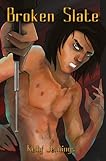 Broken Slate by Kelly Jennings
My rating: 4 of 5 stars
First rating on Goodreads... I feel obligated to say something.
I debated how many stars to give this. The characterization is intense, the world-building is solid and the dialogue flows smoothly. And the text is clean, so far as grammar and typos -- something I've come to value a lot since I started reading free e-samples.
But the plot. It moves at a rather glacial pace. At the end, it feels like this has all been set-up for the next part of the story. Which I would not mind seeing, by the way, dear author...
I read the free sample, which was a generous first half of the book, and at the end of the sample I could not have told you what Martin's goal was, aside from physical survival (which should not be under-rated, admittedly.) Yet I bought the second half, and I don't have much of a book budget these days.
No regrets. As I said, the characterization is intense. So I'm giving this four stars and hoping to see more from Ms. Jennings.
View all my reviews
Broken Slate by Kelly JenningsMy rating: 4 of 5 stars
First rating on Goodreads... I feel obligated to say something.
I debated how many stars to give this. The characterization is intense, the world-building is solid and the dialogue flows smoothly. And the text is clean, so far as grammar and typos -- something I've come to value a lot since I started reading free e-samples.
But the plot. It moves at a rather glacial pace. At the end, it feels like this has all been set-up for the next part of the story. Which I would not mind seeing, by the way, dear author...
I read the free sample, which was a generous first half of the book, and at the end of the sample I could not have told you what Martin's goal was, aside from physical survival (which should not be under-rated, admittedly.) Yet I bought the second half, and I don't have much of a book budget these days.
No regrets. As I said, the characterization is intense. So I'm giving this four stars and hoping to see more from Ms. Jennings.
View all my reviews
Monday, August 8, 2011
A birthday valentine
Happy Birthday to me... and it's already been a good birthday, even though it's early. Yesterday, the first local apples of the season arrived at my local farm stand -- Ginger Golds, a near-perfect balance of sweet and tart IMHO. I also started writing again. It's just a piece of backstory for the fantasy monstrosity I've been working on and blogging about, but it's the tip of an iceberg.
Today, I am 40 (shrugs). I ought to have some sort of contest or give-away, but sadly money is very tight for me as it is for a lot of people in this recession. So instead I am posting a little love note to science fiction and one particular under-appreciated movie that pushed me toward sci-fi.
2010: The Year We Make Contact
If you hear about this movie at all, it's usually in the context of how it wasn't as good as 2001. When I saw it, I didn't know that it was a sequel and somehow, in spite of having already seen Star Wars and Star Trek and Tron and the original Battlestar Galactica and many episodes of Tom Baker-era Dr. Who that gave me nightmares, it was 2010 that crushed all the space opera under a perfectly proportioned black monolith and made me a hard science fiction writer.
There's a moment in the movie where the Leonov is approaching Jupiter and the frame is simply the planet, black space, and the ship with its center portion spinning. It's burned on my brain: this is science fiction. Going out there, into the dangerous unknown, to find out what happened to the previous mission.
All the science fiction I've read or seen since then has covered all the great themes of the genre: action, adventure, fear, idealism, oppression, survival. Love. I've always been fond of the wonder, though. The cosmic grandeur. Sure, I've made my pilgrimage to Mordor, I've languished in Narnia and Earthsea. Fantasy has its grand themes of good and evil.
But space is different. You don't conquer it. It's eternal.
A planet, a ship and the void. I may leave you for a while, science fiction, but you know I'll come crawling back for more.
What genre would you write a valentine to?
Today, I am 40 (shrugs). I ought to have some sort of contest or give-away, but sadly money is very tight for me as it is for a lot of people in this recession. So instead I am posting a little love note to science fiction and one particular under-appreciated movie that pushed me toward sci-fi.
2010: The Year We Make Contact
If you hear about this movie at all, it's usually in the context of how it wasn't as good as 2001. When I saw it, I didn't know that it was a sequel and somehow, in spite of having already seen Star Wars and Star Trek and Tron and the original Battlestar Galactica and many episodes of Tom Baker-era Dr. Who that gave me nightmares, it was 2010 that crushed all the space opera under a perfectly proportioned black monolith and made me a hard science fiction writer.
There's a moment in the movie where the Leonov is approaching Jupiter and the frame is simply the planet, black space, and the ship with its center portion spinning. It's burned on my brain: this is science fiction. Going out there, into the dangerous unknown, to find out what happened to the previous mission.
All the science fiction I've read or seen since then has covered all the great themes of the genre: action, adventure, fear, idealism, oppression, survival. Love. I've always been fond of the wonder, though. The cosmic grandeur. Sure, I've made my pilgrimage to Mordor, I've languished in Narnia and Earthsea. Fantasy has its grand themes of good and evil.
But space is different. You don't conquer it. It's eternal.
A planet, a ship and the void. I may leave you for a while, science fiction, but you know I'll come crawling back for more.
 |
| Closest I could find to the image that's burned on my brain |
What genre would you write a valentine to?
Tuesday, July 26, 2011
Character coversations: Shen
I just finished the first draft of Orbital Shifts last night. We'll see how long it takes me to get antsy... and which project I'll pick up next.
I’ve been looking at other character interviews online and maybe I’m being too informal and conversational with my characters. So I’m hauling in “the responsible one” for some more official-like questions.
(That gets me a glare) Responsible? Supposed to be the responsible one?
(From the next room, Maggie yells) Responsible for screw—
(Shen kicks the door shut.) Never going to live it down, am I.
Probably not. Okay, first question: The first novel, Course Corrections, is about breaking into a secure asteroid prison-and-rehab facility to rescue a few people. What was your role?
(I point the microphone at him and he just looks at me.) Come on, I’m God here. The authorities have to play by my rules.
I was the spider. (please explain?) Spider suit is an EVA-ready stillsuit equipped with multi-wavelength camouflage, a gecko-based adhesive surface and a facilitating AI. Spider is the chuck inside the suit. For this job, I was the one inside the Trojan Horse.
Note: anyone asking what a stillsuit is will be smacked with a hardcover copy of Dune.
Don’t you have to hand in your hard SF cred for mentioning Dune?
If we invented it tomorrow, we’d call it a stillsuit. Second question: Maggie led this break-in to rescue her cousin, Neal McBride. Why did you join her team?
Got into the resistance on the ground floor, knew all the McBrides. Neal paid the piper for a lot of us, in the end. Didn’t deserve that. They sent him off for “therapy” to “fix” him — not a thing wrong with the chuck, he’s just booter and they’re not.
To secure the funding for this break-in, Maggie had to agree to rescue some less pleasant booters who were being held in that facility.
Was going to be trouble from the start, that. Of all the booters they’ve locked up, Tanner Sheppard was one that I’d leave there. Pirate. Slaver. (shakes his head) Giving us a bad name, booters like him.
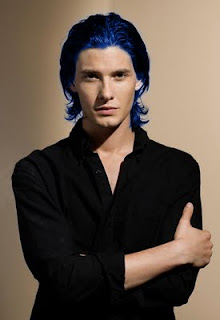 Third question: you sure I can’t get you to grow your hair out like your reference photo?
Long hair in zero gravity is a hassle. (You call that long? I point at Maggie and other long-haired characters but he shakes his head) Rough enough on it with all the coloring.
Right, we should mention your punk tendencies. Hair was dark blue at the start, wasn’t it? Unfortunately for you, I’m bored and I have Photoshop. Let’s make that pic a little more accurate.
Knew you couldn’t be serious for a whole interview.
Okay, let’s be serious then. I’m working on a Twitter-sized pitch for the sequel, Orbital Shifts: Tanner Sheppard’s no pirate, but he’ll have to prove that to all of Jupiter’s moons, clear? And to Maggie McBride.
As of the start of that (the sequel) I say he’s a drunk and a brawler and a general fuck-up. Should cut him loose and don’t look back.
Think Maggie will go easier on him than you?
(considers that for a while) Think Maggie’s ambitions could get in the way. Why I stayed on after the rescue job to watch her back. (thoughtful for another moment, and adds) When I met her, she was just Glenna McBride’s kid sister. Not the way she’ll be remembered, though.
Orbital Shifts, first draft 70.6K, is in need of betas who have not read Course Corrections. Then it will go into hibernation alongside its other half until the Viable Paradise workshop in October. Then we'll see about queries and such. Life creeps at such petty pace. Meanwhile... stay tuned.
I’ve been looking at other character interviews online and maybe I’m being too informal and conversational with my characters. So I’m hauling in “the responsible one” for some more official-like questions.
(That gets me a glare) Responsible? Supposed to be the responsible one?
(From the next room, Maggie yells) Responsible for screw—
(Shen kicks the door shut.) Never going to live it down, am I.
Probably not. Okay, first question: The first novel, Course Corrections, is about breaking into a secure asteroid prison-and-rehab facility to rescue a few people. What was your role?
(I point the microphone at him and he just looks at me.) Come on, I’m God here. The authorities have to play by my rules.
I was the spider. (please explain?) Spider suit is an EVA-ready stillsuit equipped with multi-wavelength camouflage, a gecko-based adhesive surface and a facilitating AI. Spider is the chuck inside the suit. For this job, I was the one inside the Trojan Horse.
Note: anyone asking what a stillsuit is will be smacked with a hardcover copy of Dune.
Don’t you have to hand in your hard SF cred for mentioning Dune?
If we invented it tomorrow, we’d call it a stillsuit. Second question: Maggie led this break-in to rescue her cousin, Neal McBride. Why did you join her team?
Got into the resistance on the ground floor, knew all the McBrides. Neal paid the piper for a lot of us, in the end. Didn’t deserve that. They sent him off for “therapy” to “fix” him — not a thing wrong with the chuck, he’s just booter and they’re not.
To secure the funding for this break-in, Maggie had to agree to rescue some less pleasant booters who were being held in that facility.
Was going to be trouble from the start, that. Of all the booters they’ve locked up, Tanner Sheppard was one that I’d leave there. Pirate. Slaver. (shakes his head) Giving us a bad name, booters like him.

Long hair in zero gravity is a hassle. (You call that long? I point at Maggie and other long-haired characters but he shakes his head) Rough enough on it with all the coloring.
Right, we should mention your punk tendencies. Hair was dark blue at the start, wasn’t it? Unfortunately for you, I’m bored and I have Photoshop. Let’s make that pic a little more accurate.
Knew you couldn’t be serious for a whole interview.
Okay, let’s be serious then. I’m working on a Twitter-sized pitch for the sequel, Orbital Shifts: Tanner Sheppard’s no pirate, but he’ll have to prove that to all of Jupiter’s moons, clear? And to Maggie McBride.
As of the start of that (the sequel) I say he’s a drunk and a brawler and a general fuck-up. Should cut him loose and don’t look back.
Think Maggie will go easier on him than you?
(considers that for a while) Think Maggie’s ambitions could get in the way. Why I stayed on after the rescue job to watch her back. (thoughtful for another moment, and adds) When I met her, she was just Glenna McBride’s kid sister. Not the way she’ll be remembered, though.
Orbital Shifts, first draft 70.6K, is in need of betas who have not read Course Corrections. Then it will go into hibernation alongside its other half until the Viable Paradise workshop in October. Then we'll see about queries and such. Life creeps at such petty pace. Meanwhile... stay tuned.
Thursday, July 21, 2011
Character conversations: Valentin
Segue from Maggie's conversation to talking with Valentin, her main squeeze. My comments and notes in italics.
You were involved in Glenna's uprising toward the end. How did you escape Glenna McBride's infamous seductive powers?
Not by trying to avoid it. Noticed her, of course, hard not to. I was not on her radar, I think. So I did not get full force of her attention. Saw her use it, though. On other men at that mixer before attack on Kennedy Station.
Was only just seventeen, then. Glenna, she was... old woman. (with a teasing laugh) What, twenty? Maybe twenty-one.
(I punch him in the shoulder on behalf of all women. He pretends it hurt, and it’s annoyingly cute how his eyes squish up when he laughs.) And this was five years ago that you were seventeen. Old man.
I should live so long. Be so lucky. Yes, I thought about Glenna. Maybe when I was alone in my bunk, too. Was redhead I kept looking at, though. One with... (he pauses to think) You know fabricators, systems that digest mined rock into elements, build it into plastics, all things you need on homestead.
(Fabricators are complex arrays of chemical and biological treatment systems, all run by an AI. The automated machinery can crush down anything, render it into simple chemicals and then build new substances back up. Plastics, water, oxygen, glass, metal... if all the ingredients are in what you feed it.)
Looking at Maggie was like looking into fabricator's forge as iron is cast. Glenna, she was full of anger, full of passion. Beautiful. Maggie...
Did you see that when you met her again, five years later?
Forge had cooled by then. Only iron. She was magnet, I suppose. (smiles) Could not resist.
Did we ever set a last name for you?
(he shrugs) Fine just being Valentin. Stop looking — there isn’t one. (Could’ve sworn I did when I decided your home ‘stead was called Mirgorod. Should’ve used it when we met you back at the beginning.) Works, what you put. “Last name as Russian as he looked.” (Found it later. Mirovalev.)
Just trying to keep you clear in people’s heads. Got this passel of cute guys, I’ve got to do something…
So we interview to work on accent, yes. But said you do not believe in writing accents.
Not phonetically. Not in painful detail. But a little word choice tweaking will set you apart.
Maybe I learned English young, though. Not American Russian, but can still pick it up over networks and net-school. Not tiny homestead, Mirgorod, Long Runners come and go.
Look, I’m not asking you to pick up some cheesy Soviet accent.
(with a grin, letting his accent thicken) Pass me vodka.
Should I worry about alcoholism? (I pour a couple shots, though)
(still laying on the accent) Live on rock and void waits to eat soul. Any slip, it get you. More vodka help you sleep at night.
More vodka make you stupid.
(pours himself another) Famous Russian drinking, is like marathon. Train all time. Start young.
I probably don’t want to ask.
(with a raspberry) Americans. Martian corporations we need to shuck off — none are Russian. Was Americans who wanted to live in gees, on big stations with redundancies and all safety (air quotes with that second shot in hand) they could lift up here.
But Americans are a major part of the bootstrapper population.
Still some pioneer blood left. Russians were bootstrapping before millennium turned. (empties that second shot) We got here first. Americans followed with their luggage. (image of tourists in Hawaiian shirts with a luggage cart stacked ludicrously high)
OK, that stings a bit.
My opinion. (Yup. You’re the chatty one, of the guys, aren’t you. He shrugs.) Get few shots in us, we loosen up. Except for DB. So it was me and Shen and Clay. (And Danika and Yvana. He nods.) Russian, aren’t they? And Maggie too. Hackers were always hacking. Not good, never taking breaks. Never unwinding.
Americans know something about working hard, at least. Makes us a little better than tourists? He shrugs at that too.
Americans still think Russian men are shadowy, dangerous Soviets? That sexy? (You shut up right there, comrade, you’re showing my age. He chuckles at that.) So why this reference photo?
What? Adrien Brody’s got Eastern European in him. Not as far off as some of my ref photos. Plus — melancholy? And those hands? Sexy, yeah.
So it’s Russian melancholy, then? (pours himself a third shot.) Cheerfulness of the damned, is that right phrase? Stereotype? What is Russian stereotype, since Soviet Union died?
Gangster? Anybody can be a gangster, though. Good question. Maybe my readers will comment on that. And this is running long, so I’m going to stand by you being the chatty one. :)
You were involved in Glenna's uprising toward the end. How did you escape Glenna McBride's infamous seductive powers?
Not by trying to avoid it. Noticed her, of course, hard not to. I was not on her radar, I think. So I did not get full force of her attention. Saw her use it, though. On other men at that mixer before attack on Kennedy Station.
Was only just seventeen, then. Glenna, she was... old woman. (with a teasing laugh) What, twenty? Maybe twenty-one.
(I punch him in the shoulder on behalf of all women. He pretends it hurt, and it’s annoyingly cute how his eyes squish up when he laughs.) And this was five years ago that you were seventeen. Old man.
I should live so long. Be so lucky. Yes, I thought about Glenna. Maybe when I was alone in my bunk, too. Was redhead I kept looking at, though. One with... (he pauses to think) You know fabricators, systems that digest mined rock into elements, build it into plastics, all things you need on homestead.
(Fabricators are complex arrays of chemical and biological treatment systems, all run by an AI. The automated machinery can crush down anything, render it into simple chemicals and then build new substances back up. Plastics, water, oxygen, glass, metal... if all the ingredients are in what you feed it.)
Looking at Maggie was like looking into fabricator's forge as iron is cast. Glenna, she was full of anger, full of passion. Beautiful. Maggie...
Did you see that when you met her again, five years later?
Forge had cooled by then. Only iron. She was magnet, I suppose. (smiles) Could not resist.
Did we ever set a last name for you?
(he shrugs) Fine just being Valentin. Stop looking — there isn’t one. (Could’ve sworn I did when I decided your home ‘stead was called Mirgorod. Should’ve used it when we met you back at the beginning.) Works, what you put. “Last name as Russian as he looked.” (Found it later. Mirovalev.)
Just trying to keep you clear in people’s heads. Got this passel of cute guys, I’ve got to do something…
So we interview to work on accent, yes. But said you do not believe in writing accents.
Not phonetically. Not in painful detail. But a little word choice tweaking will set you apart.
Maybe I learned English young, though. Not American Russian, but can still pick it up over networks and net-school. Not tiny homestead, Mirgorod, Long Runners come and go.
Look, I’m not asking you to pick up some cheesy Soviet accent.
(with a grin, letting his accent thicken) Pass me vodka.
Should I worry about alcoholism? (I pour a couple shots, though)
(still laying on the accent) Live on rock and void waits to eat soul. Any slip, it get you. More vodka help you sleep at night.
More vodka make you stupid.
(pours himself another) Famous Russian drinking, is like marathon. Train all time. Start young.
I probably don’t want to ask.
(with a raspberry) Americans. Martian corporations we need to shuck off — none are Russian. Was Americans who wanted to live in gees, on big stations with redundancies and all safety (air quotes with that second shot in hand) they could lift up here.
But Americans are a major part of the bootstrapper population.
Still some pioneer blood left. Russians were bootstrapping before millennium turned. (empties that second shot) We got here first. Americans followed with their luggage. (image of tourists in Hawaiian shirts with a luggage cart stacked ludicrously high)
OK, that stings a bit.
My opinion. (Yup. You’re the chatty one, of the guys, aren’t you. He shrugs.) Get few shots in us, we loosen up. Except for DB. So it was me and Shen and Clay. (And Danika and Yvana. He nods.) Russian, aren’t they? And Maggie too. Hackers were always hacking. Not good, never taking breaks. Never unwinding.
 |
| One of my better reference choices... |
Americans still think Russian men are shadowy, dangerous Soviets? That sexy? (You shut up right there, comrade, you’re showing my age. He chuckles at that.) So why this reference photo?
What? Adrien Brody’s got Eastern European in him. Not as far off as some of my ref photos. Plus — melancholy? And those hands? Sexy, yeah.
So it’s Russian melancholy, then? (pours himself a third shot.) Cheerfulness of the damned, is that right phrase? Stereotype? What is Russian stereotype, since Soviet Union died?
Gangster? Anybody can be a gangster, though. Good question. Maybe my readers will comment on that. And this is running long, so I’m going to stand by you being the chatty one. :)
Monday, July 18, 2011
Character conversations: Maggie
Won't be as depressing as Tanner's, I promise. My questions and notes in italics.
How did I let you get away with not telling me much about where you’re from?
Was just a pit stop on a tiny moon. A kilometer across. Jupiter’s got dozens of them flying around looking for stable orbits.
So these one-kay rocks would be a risky place to set up, then.
Yes, but on the other hand it only takes one hauler to nudge it if you need to. Had to do that, once. Holly said we were on course to tap another one-kay and fall into Jupiter, so Pa and Uncle contracted with Josh. (Josh, the captain of Himalia Express caravan who was later part of Glenna’s uprising) Himalia Star put her nose on our rock and pushed for twelve hours. Which is just a little nudge, as these things go, but that was all we needed.
 Pit stop, explain that.
My Ma, my Pa, Pa’s brother and his woman and a few friends all pitched in and carved a little homestead out of a one-kay. Most ‘steads base their business on mining or farming and things associated with that. Our goal was to be a nice place to stop. We did some mining and farming, sure, but mining out a one-kay rock’s a dead-end plan.
We served good food, good drink, and good entertainment. We were good company. Could clean your ventilation ducts and re-seed your recycler while you steamed in our sauna and cooled down with our orange sherbert. Even the hard-core Long Runners like that.
You said you did Shakespeare in your little vaudeville show. How much?
Did scenes, not whole plays, and did adaptations, not the old-timey language nobody would get. But fun stuff. People liked our take on Romeo’s swordfight with Tybalt. Neal would be Mercutio.
Not Romeo?
No, Antonio would be Romeo. Better at the swordfighting — which is hilarious in zero gee, of course.
What roles did you take?
Did all the kid roles until I started to… grow in. (adjusts corset) Glenna’d been doing all the pretty-girl roles and Pa dragged his feet about letting me try some of them.
Guess it’s tough to send your little girl on stage with her boobs strategically overflowing.
Wasn’t a problem with Glenna, though. (eyeroll) Big sis got to do everything, I was just the kid. Wished we hadn’t been so many years apart, sometimes. (Glenna was five years older.) Was great when I was littler, but then the hormones kicked in and I was completely outgunned by her. Did a lot of crying in my bunk because I thought nobody ever looked at me and saw anything but a consolation prize.
Wished she was there after she was gone, though. Plenty of times.
Those years on your own were tough, and you haven’t talked about them. But then you met Val.
Nothing worth talking about until I met Val. Magic, how bumping into somebody can turn you around. Imagine if I hadn’t. (smiles)
How did I let you get away with not telling me much about where you’re from?
Was just a pit stop on a tiny moon. A kilometer across. Jupiter’s got dozens of them flying around looking for stable orbits.
So these one-kay rocks would be a risky place to set up, then.
Yes, but on the other hand it only takes one hauler to nudge it if you need to. Had to do that, once. Holly said we were on course to tap another one-kay and fall into Jupiter, so Pa and Uncle contracted with Josh. (Josh, the captain of Himalia Express caravan who was later part of Glenna’s uprising) Himalia Star put her nose on our rock and pushed for twelve hours. Which is just a little nudge, as these things go, but that was all we needed.

My Ma, my Pa, Pa’s brother and his woman and a few friends all pitched in and carved a little homestead out of a one-kay. Most ‘steads base their business on mining or farming and things associated with that. Our goal was to be a nice place to stop. We did some mining and farming, sure, but mining out a one-kay rock’s a dead-end plan.
We served good food, good drink, and good entertainment. We were good company. Could clean your ventilation ducts and re-seed your recycler while you steamed in our sauna and cooled down with our orange sherbert. Even the hard-core Long Runners like that.
You said you did Shakespeare in your little vaudeville show. How much?
Did scenes, not whole plays, and did adaptations, not the old-timey language nobody would get. But fun stuff. People liked our take on Romeo’s swordfight with Tybalt. Neal would be Mercutio.
Not Romeo?
No, Antonio would be Romeo. Better at the swordfighting — which is hilarious in zero gee, of course.
What roles did you take?
Did all the kid roles until I started to… grow in. (adjusts corset) Glenna’d been doing all the pretty-girl roles and Pa dragged his feet about letting me try some of them.
Guess it’s tough to send your little girl on stage with her boobs strategically overflowing.
Wasn’t a problem with Glenna, though. (eyeroll) Big sis got to do everything, I was just the kid. Wished we hadn’t been so many years apart, sometimes. (Glenna was five years older.) Was great when I was littler, but then the hormones kicked in and I was completely outgunned by her. Did a lot of crying in my bunk because I thought nobody ever looked at me and saw anything but a consolation prize.
Wished she was there after she was gone, though. Plenty of times.
Those years on your own were tough, and you haven’t talked about them. But then you met Val.
Nothing worth talking about until I met Val. Magic, how bumping into somebody can turn you around. Imagine if I hadn’t. (smiles)
Friday, July 8, 2011
Character conversations: Tanner again
I've submitted Tanner for an evaluation over at The Character Therapist. Here are some of the evaluation questions he answered, edited for spoilers and brevity. You can see a few more questions from this form that Tanner answered for a blogfest here.
Note: the Jovian Frontier is a science fiction world in the not-so-distant future. Questions in bold face, my comments and observations in italics. The rest are his words. Little bit of swearing ahead.
Character's Full Name:
Tanner Sheppard. No middle name? He shrugs. How about Quentin? ‘Tanner’ isn’t odd enough? Could talk about where that came from. True, I could write a blog post on the dangers of naming your characters on the fly. Never know if they’re going to stay minor characters. He smirks.
Age:
24. Note that I’m just taking his word on this. I don’t have much to base it on.
In a paragraph, how would you describe yourself in your own words?
Breath of a chuckle. I’m what came back home to roost. Didn’t expect this, that’s clear. Reflects for a moment. I’m an ex-pirate. Which is an ex-killer, ex-slaver, ex-… betrayer. Slaver? You did that, even with how you feel about your mother? He sets his teeth on his lower lip, then answers, Could say it was Pa that did it, he’d draw up the fake indenture papers. Sell them. Can’t deny my part in it any more. Therapy really fucked me over. Used to be simple. Used to just hate everything.
What were the family dynamics in your home growing up? What are they now?
Sketch, okay. Pirate caravan of four or five spaceships (15-20 people), in and out of Ananke (one of Jupiter’s small moons, a pretty rough place) every few months. Captained by the coldest fucking bastard in Jupiter system. If they’re not conning their way up to Long Runner caravans or small homesteads so they can turn around and gut the place, they’re farting around drunk and bored. Throw in a boy and two girls, that’d be me and Connie and Pru. And whatever slaves they’ve got around for toys. He’s tensing up as he says that, the thousand-yard stare creeping into his eyes.
Got scars to show for it, on your arm. Can I paste in the story as you told it to Connie? He nods.
Said you had some stability, though. Some mothering. Yeah, Pa kept… Ma, well she was Ma to me for years and no matter what the truth was. Sorta remember before she was around, but… Shakes his head. She was Connie and Pru’s mother, mine too. But a slave. Was always clear on that. Safest place we had, sleeping in her bunk together. Till we got too big to all fit. Still slept there, after she was gone.
What happened? He just looks away and shakes his head again. Question wants to know what the situation is now, too. Pa’s dead, shot him myself a few weeks ago. Ma’s gone. Connie’d run away before they arrested me. Got back to Ananke and Pru’d run too. Can’t blame them. Nothing worth sticking around for — far as they knew, I was a spitting image of Pa. Just another animal.
What was the most important childhood event that still affects you today and why?
He rubs his hand against his cheek and then over his chin. Thinks for a few minutes. Most’ve those years had just slipped away, before. Packed away behind an airlock like the void. But then they sentenced me to therapy and strapped me down under a halo scanner, pumped me full of Parathena. Ripped me wide open and rummaged around inside. Don’t remember the first few months, actually, they had to sedate me half the time. Sentenced to being ‘fixed’ — a good thing, in your case. Maybe good now. Was hell all over again. Can’t pick out one, whole thing… hangs over me.
Do you or your immediate family have a history of mental illness? If yes, explain.
That actually gets a laugh — a weak, gallows-humor laugh. We sick, or just fucked? There a difference?
Note: the Jovian Frontier is a science fiction world in the not-so-distant future. Questions in bold face, my comments and observations in italics. The rest are his words. Little bit of swearing ahead.
 |
| Reference photo - Tanner's got bluer eyes, browner hair, different face. Using Brad Pitt from Kalifornia as a ref for the feral look in his eye, the body language. |
Tanner Sheppard. No middle name? He shrugs. How about Quentin? ‘Tanner’ isn’t odd enough? Could talk about where that came from. True, I could write a blog post on the dangers of naming your characters on the fly. Never know if they’re going to stay minor characters. He smirks.
Age:
24. Note that I’m just taking his word on this. I don’t have much to base it on.
In a paragraph, how would you describe yourself in your own words?
Breath of a chuckle. I’m what came back home to roost. Didn’t expect this, that’s clear. Reflects for a moment. I’m an ex-pirate. Which is an ex-killer, ex-slaver, ex-… betrayer. Slaver? You did that, even with how you feel about your mother? He sets his teeth on his lower lip, then answers, Could say it was Pa that did it, he’d draw up the fake indenture papers. Sell them. Can’t deny my part in it any more. Therapy really fucked me over. Used to be simple. Used to just hate everything.
What were the family dynamics in your home growing up? What are they now?
Sketch, okay. Pirate caravan of four or five spaceships (15-20 people), in and out of Ananke (one of Jupiter’s small moons, a pretty rough place) every few months. Captained by the coldest fucking bastard in Jupiter system. If they’re not conning their way up to Long Runner caravans or small homesteads so they can turn around and gut the place, they’re farting around drunk and bored. Throw in a boy and two girls, that’d be me and Connie and Pru. And whatever slaves they’ve got around for toys. He’s tensing up as he says that, the thousand-yard stare creeping into his eyes.
Got scars to show for it, on your arm. Can I paste in the story as you told it to Connie? He nods.
Tanner looked down at them, on his forearm. “Captured a ship,” he said. “Got shot up in the taking. I was crying because of the bodies, the mess. Pa backhanded me onto a broken panel. Screamed, I know, seeing my blood curling up out of my arm (in zero gravity).” He shuddered. “Hoult shoved me in the airlock and beat the shit out of me. Told me he’d open the hatch with the rips in my suit, let the void eat my soul. Started it cycling, even. Felt it sucking the blood out of me as he wrapped me up with seal-all tape.”
Connie’s eyes were soft. “Dev told me how to bandage you up.”
He managed a bit of a smile. “Did a good job.”
“For an eight-year-old,” she allowed. “Patching up big brother.”
Said you had some stability, though. Some mothering. Yeah, Pa kept… Ma, well she was Ma to me for years and no matter what the truth was. Sorta remember before she was around, but… Shakes his head. She was Connie and Pru’s mother, mine too. But a slave. Was always clear on that. Safest place we had, sleeping in her bunk together. Till we got too big to all fit. Still slept there, after she was gone.
What happened? He just looks away and shakes his head again. Question wants to know what the situation is now, too. Pa’s dead, shot him myself a few weeks ago. Ma’s gone. Connie’d run away before they arrested me. Got back to Ananke and Pru’d run too. Can’t blame them. Nothing worth sticking around for — far as they knew, I was a spitting image of Pa. Just another animal.
What was the most important childhood event that still affects you today and why?
He rubs his hand against his cheek and then over his chin. Thinks for a few minutes. Most’ve those years had just slipped away, before. Packed away behind an airlock like the void. But then they sentenced me to therapy and strapped me down under a halo scanner, pumped me full of Parathena. Ripped me wide open and rummaged around inside. Don’t remember the first few months, actually, they had to sedate me half the time. Sentenced to being ‘fixed’ — a good thing, in your case. Maybe good now. Was hell all over again. Can’t pick out one, whole thing… hangs over me.
Do you or your immediate family have a history of mental illness? If yes, explain.
That actually gets a laugh — a weak, gallows-humor laugh. We sick, or just fucked? There a difference?
Saturday, May 28, 2011
Made of Awesome blogfest!
Title: Course Corrections
Genre: Hard SF thriller
Word Count: 77,400
First 250 of Chapter 1:
Five years ago
Neal was cooperative, even docile, until he saw the chair and the halo scanner at its head; then he planted both bare feet and backpedaled. His two guards had him by the elbows, his hands cuffed in front of him, and they picked him up easily in the low gravity.
“No. No, please!” Neal twisted in their grip, and with a bootstrapper’s instinct for low gee shoved one foot down hard behind him. He spun, facefirst, wrenching his elbows out of their hands. Shoving his palms against the floor, he zipped back a meter, put his feet down again and was bolting for the door when they tackled him.
“No!” His voice cracked, ragged, as they dragged him back to the chair. “Don’t do this! Don’t take her away!”
“Don’t be ridiculous,” the doctor said, sitting lightly on a stool beside the halo scanner to check the data on his handheld display.
“Don’t wipe me,” Neal pleaded, tears coming. He flinched when the nurse touched an injector gun to the crook of his elbow, just below the uniform’s sleeve, and dosed him. “Don’t wipe me, please. Don’t take her away. I don’t want to forget.”
“Neal McBride,” the doc said as his patient was strapped down. “I’m Dr. Seitz and I’ll be seeing you through the first stages of therapy.”
The guards stepped back once Neal was tied to the chair and his head clamped under the halo scanner. Seitz nodded to them and they left the doctor and nurse with their patient in the white therapy lab.
Would you keep reading? :D All feedback welcome.
Blogfest hosted by Shelley Watters -- read more entries from the list here!
Sunday Edits - tweaked the first paragraph according to comments... did my best to describe balking. :) Thank you everyone, and good luck!
Genre: Hard SF thriller
Word Count: 77,400
First 250 of Chapter 1:
Five years ago
Neal was cooperative, even docile, until he saw the chair and the halo scanner at its head; then he planted both bare feet and backpedaled. His two guards had him by the elbows, his hands cuffed in front of him, and they picked him up easily in the low gravity.
“No. No, please!” Neal twisted in their grip, and with a bootstrapper’s instinct for low gee shoved one foot down hard behind him. He spun, facefirst, wrenching his elbows out of their hands. Shoving his palms against the floor, he zipped back a meter, put his feet down again and was bolting for the door when they tackled him.
“No!” His voice cracked, ragged, as they dragged him back to the chair. “Don’t do this! Don’t take her away!”
“Don’t be ridiculous,” the doctor said, sitting lightly on a stool beside the halo scanner to check the data on his handheld display.
“Don’t wipe me,” Neal pleaded, tears coming. He flinched when the nurse touched an injector gun to the crook of his elbow, just below the uniform’s sleeve, and dosed him. “Don’t wipe me, please. Don’t take her away. I don’t want to forget.”
“Neal McBride,” the doc said as his patient was strapped down. “I’m Dr. Seitz and I’ll be seeing you through the first stages of therapy.”
The guards stepped back once Neal was tied to the chair and his head clamped under the halo scanner. Seitz nodded to them and they left the doctor and nurse with their patient in the white therapy lab.
Would you keep reading? :D All feedback welcome.
Blogfest hosted by Shelley Watters -- read more entries from the list here!
Sunday Edits - tweaked the first paragraph according to comments... did my best to describe balking. :) Thank you everyone, and good luck!
Monday, May 23, 2011
Power of Tension Blogfest

Check out the Power of Tension Blogfest at Cally Jackson Writes and Rachel Morgan Writes! I'm entering an excerpt from the middle of my hard SF/horror short story "The Rookery":
Danika pointed to something in the wall, looking at me pointedly over her shoulder. I recognized the crescent shape, the smooth bit of dome. Portion of an eye socket and skull. Human. And then we heard the noise and she snapped the bolt rifle up, ready.
I know. Hard vacuum. Sound’s impossible. Past the end of the wall and the opening it created, a hallway led off the great room toward a lonely emergency light by the airlock. Then a shadow moved in the light cast by the opening, and the noise started again.
A series of clicks, followed by a chorus of soft, crooning calls. Kee-ah, kee-ah. Two clicks, and the crooning stopped. Danika touched the stone with one hand and glided slowly toward the end of the wall. Her toes dragged, bringing her to a stop as she peeked around the corner, over the rifle’s sights.
“Payge,” she whispered over the intercom, “see where the hall is, there?” Indicated the next emergency light. “Gap’s about two meters. Come up here and on my mark, go. Don’t look, just go.”
Claire shot me a wide-eyed look. I crept alongside Danika and gathered up my feet underneath me, waited. When her hand moved, I kicked hard and shot across the gap between the brown wall and the stone hallway the ‘steaders had cut. I couldn’t help it, I looked as I went.
Too much to see in the second I saw it: a mass of slithering limbs, three small bat-winged flyers eagerly hopping and flapping, their reptilian, toothed jaws open in anticipation. Their tentacled master held a treat just out of their reach: a human arm, torn off at the shoulder.
Feedback welcome!
Got the Made of Awesome blogfest starting Friday too!
Subscribe to:
Posts (Atom)
